Your guide to Georgia
Top destinations in Georgia
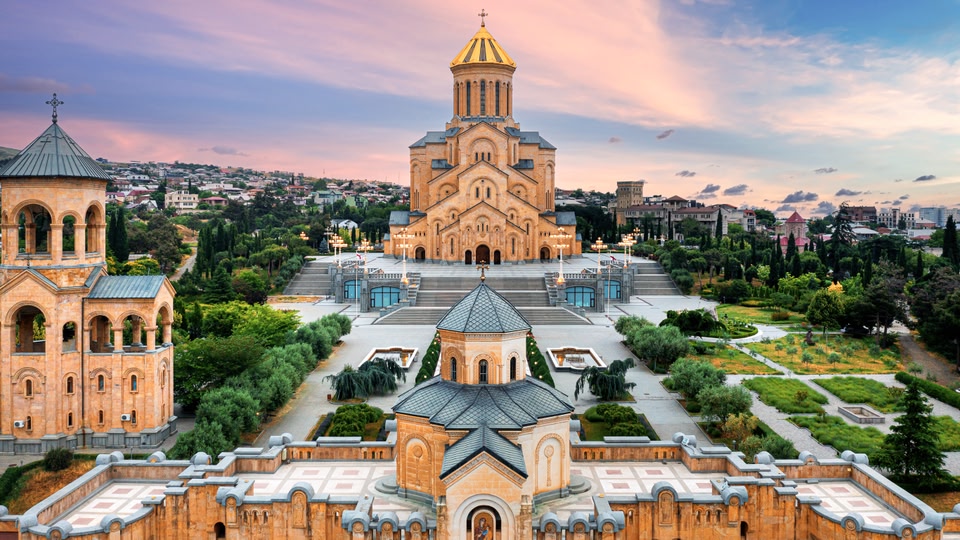
Tbilisi
Centuries of history await in Tbilisi. But you’ll also discover flourishing creativity and a fantastic culinary culture in this underrated capital that’s bursting with flavour.

Batumi
Wedged between the mountains and the Black Sea, Batumi is a patchwork of pleasures. Explore its historic streets, buzzing promenade and nightlife that glitters well into the next day.

Kutaisi
One of the oldest continuously inhabited cities in the world, Kutaisi draws you in with medieval churches and ancient legends. Plus, it’s a gateway to surreal caves, verdant canyons and dinosaur footprints.
Georgia: fast facts
| Language | Georgian |
|---|---|
| Currency | Georgian lari (₾) |
| Time zone | UTC+4 |
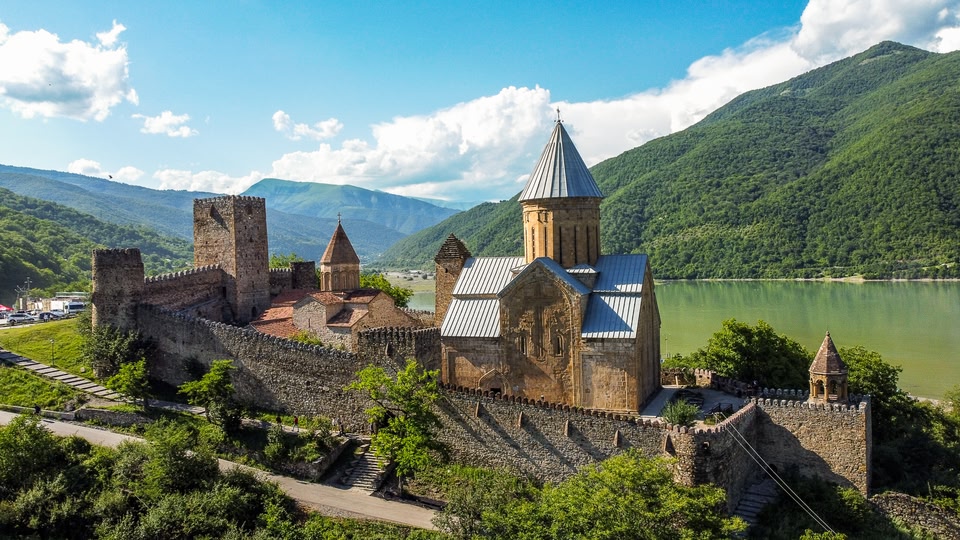
Georgia highlights
Hit the hiking trails
Trekking is one of the most popular things to do in Georgia, where around 85% of the land is mountainous. Try the four-day Mestia to Ushguli trail, passing through emerald-green valleys and soaring peaks. For quieter treks, check out the Tusheti region. Getting there is an adventure in itself — it’s only accessible via one of Europe’s most dangerous roads.
Go wine tasting
Georgia’s winemaking traditions stretch back some 8,000 years. In the Kakheti region, wines are crafted using ancient methods, including fermentation in clay pots known as ‘qvevri’. Join a wine tour to visit historic wineries that range from medieval monasteries to royal estates. Look for local varieties like saperavi (red) and rkatsiteli (white).
Explore ancient history
History is everywhere you look in Georgia. Start at Dmanisi, an ancient human settlement dating back 1.8 million years. Now an open-air museum, it’s where archaeologists found the earliest known human ancestors in Europe. Then explore the cave city of Uplistsikhe. Dating back to the fourth century BC, it’s home to pre-Christian temples, ancient wine cellars and an amphitheatre.
Things to do in Georgia
Top attractions
Many of Georgia’s star attractions are located in the capital. Ride the Tbilisi Cable Car for a bird’s-eye view of the Old Town — a maze of cobblestone streets and centuries-old buildings. The journey ends at Narikala Fortress, a fourth-century Persian citadel. Head to southern Georgia to stroll through the cliffside monastery of Vardzia, where the oldest cave houses date back to the eighth century.
Family friendly
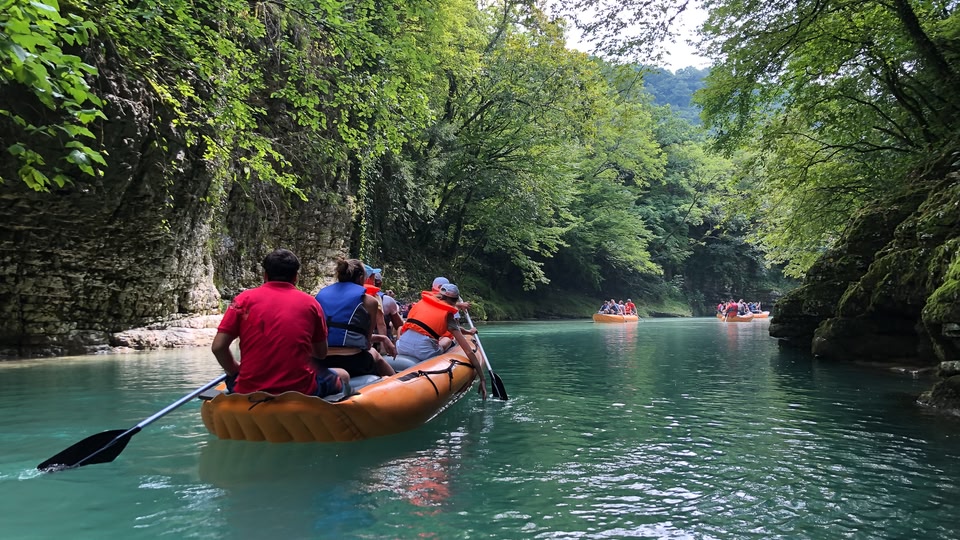
Adventurous families will feel right at home in Georgia. Take a leisurely bike ride through Tbilisi’s parks and riverside lanes, or follow the path of a narrow-gauge railway on the Borjomi to Bakuriani trail. Thrill-seekers will love whitewater rafting on the Mtkvari (Kura) River, known for its gentler rapids. For kid-friendly beaches, check out Ureki or Shekvetili, which have sandy shores and shallow waters.
Beaches
You’ll find the best beaches in Georgia along the Black Sea coast. Batumi is known for its sun-kissed shores and palm tree–lined boulevard, which comes to life with festivals in summer. For something more low-key, try Ureki, famed for its black sands that are said to have healing properties. Or relax at Kobuleti, where a long pebble beach meets a nature reserve.
Nature
From glassy lakes to wildlife-rich wetlands, Georgia fits lots of natural wonders into one small package. Step inside a spectacular cave at Sataplia Nature Reserve in the northwest to see dinosaur footprints. Or head to Lagodekhi National Park, near the border with Azerbaijan, for pristine forests, glacial lakes and natural springs. Don’t miss the five-mile hike to Ninoskhevi Waterfall.
Cuisine
With its fusion of European and Asian flavours, Georgian food is comforting, hearty and delicious. First, sample the national dish ‘khachapuri’, a cheese-filled bread sometimes topped with an egg. Try ‘khinkali’, savoury broth dumplings, or ‘chakapuli’, lamb stew with tarragon and plums. From humble homestays to upmarket restaurants in Georgia, you’ll get generous portions wherever you go.
Culture and museums
Get a history lesson at the Georgian National Museum in Tbilisi. Along with archaeological finds dating back to the third millennium BC, you can see 1.8-million-year-old human skulls and artefacts from the Soviet occupation. Another great museum in Georgia’s capital is the Art Palace. Walk through an elaborate Gothic mansion with exhibits on everything from fine art to opera.
Find the best time to visit Georgia
Weather in Georgia
March – May: Spring starts cool and wet, but you’ll get highs of around 23°C in Tbilisi by May. This is a great month for hiking, with blooming wildflowers and plenty of sunshine.
June – September: Summer is prime time for beach breaks around Batumi. It’s also the best time to trek, with reliable weather and accessible trails — some mountain passes can only be hiked in summer.
October – November: Visit in autumn for less crowded trails and food and wine festivals. Expect chillier temperatures and snow in the alpine areas, but you’ll be rewarded with vivid foliage.
December – February: Winter is the perfect time for a city break in Tbilisi, which comes to life with light displays, Christmas markets and a dusting of snow.
Events in Georgia
Kolga Tbilisi Photo (May): Georgia’s largest annual photo exhibition brings together an array of international award-winning photographers. Attend exhibitions, workshops and talks at some of the capital’s coolest cultural venues, from a former factory to a cutting-edge modern art gallery.
Tbilisi Cheese Festival (June): Cheese is a staple of Georgia’s food scene. At this summer festival, sample Georgian cheeses ranging from soft and creamy ‘imeruli’ to sheep’s milk ‘Tushetian chogi’. And leave space in your suitcase to take some home.
Rtveli (September to October): Georgia celebrates the grape harvest with this nationwide festival. Enjoy grape picking, traditional feasts, dance shows and folk singing — and, of course, plenty of good wine. Find the biggest celebrations in the Kakheti region.
Know before you go
Local etiquette
Georgians are famous for their hospitality. If you should be invited to a ‘supra’ (traditional feast), come hungry and expect a lavish spread of food and wine. Always wait for the host to make a toast before drinking, and try not to refuse anything offered to you. When visiting churches and monasteries, dress modestly, covering your shoulders and knees.
Health and safety
Many of Georgia’s greatest risks relate to the outdoors. If you plan to ski, hike or do any extreme sports, get a comprehensive travel insurance policy that covers these activities. Multi-day hikes require good fitness, backcountry experience and navigation skills — trails in the Caucasus are not always well marked. If in doubt, go with a guide.
LGBTQ+ travel
Georgia has conservative attitudes towards the LGBTQ+ community. Recently, legislation has banned same-sex marriage, adoption and gender-affirming care. Queer travellers should exercise discretion and avoid public displays of affection when travelling outside of the cities. That being said, the capital has a small, underground LGBTQ+ scene made up of a few gay bars, clubs and events.
Budget
It’s possible to enjoy Georgia affordably with a few budget-friendly hacks, like visiting outside peak season. A meal for two at an inexpensive restaurant costs 100 Georgian lari (₾). But you can find street food like ‘khachapuri’ and ‘lobiani’ (Georgian cheese bread) for much less. You’ll pay about ₾5 for a local beer and ₾8 for a cappuccino.
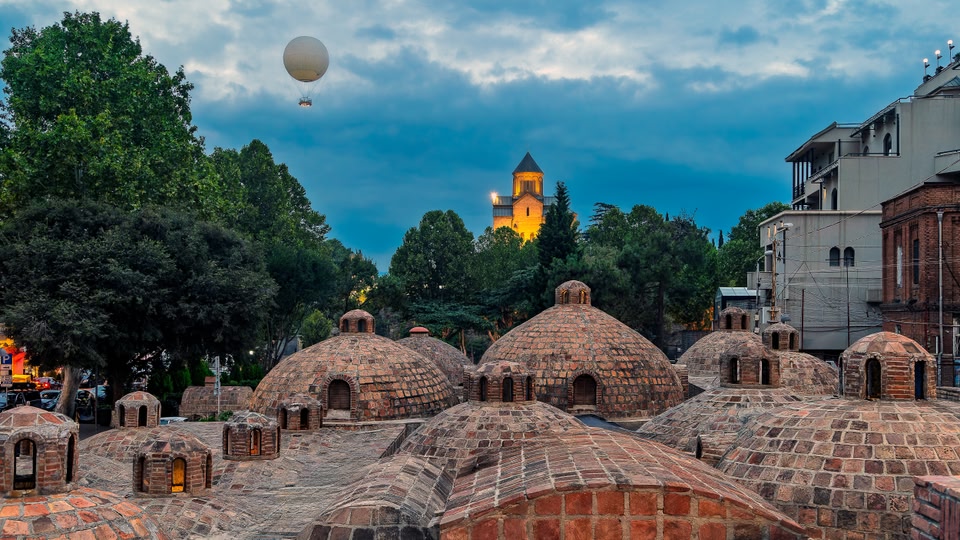
Getting around Georgia
Public transport
Buses: One of the best ways to travel between cities is on privately run minibuses known as ‘marshrutka’. Head to the local bus station for tickets and schedule information. Since signs are not always in English, knowing how your destination is written and pronounced in Georgian is helpful.
Trains: The most popular Georgian train route is the high-speed journey from Tbilisi to Batumi, which takes roughly five-and-a-half hours and usually runs twice a day. You’ll also find services linking the capital with major cities like Zugdidi, Poti and Borjomi. Book tickets through the Georgian Railway website or at the station.
Domestic flights
Georgia has five airports — Ambrolauri, Batumi, Kutaisi, Mestia and Tbilisi (Natakhtari) — with domestic flights run by Vanilla Sky. Note that flights can sometimes be cancelled due to weather conditions, especially in alpine areas.
Driving
Georgia’s scenic landscapes were made for road trips, and driving allows you to explore remote regions not connected by public transport. To hire a car, you must be at least 21 and have an International Driving Permit (IDP). Mountain roads like the Abano Pass are notorious for hairpin turns and sheer drops, so take it slowly.


