























How to find a cheap car rental deal in France
Travel at your own pace with a cheap rental car in France. With prices starting from 9 € a day, you get freedom without the high price tag. From economy models to full-size family cars, we'll help you pick your ideal ride at a price that fits.
61 € is the lowest available rate for a weekly rental if you're planning a longer adventure.
Explore the range of car rentals in Paris. This is where you'll find the cheapest wheels in France.
Overall, the most popular city to rent a car in is Paris.
If you're unsure which company to go with, check out Europcar. It ranks first for booking in France.
There's no need to go far after touching down to pick up your ride. Car rentals are available at major airports including Paris Charles de Gaulle Airport, Paris Orly Airport and Nice Airport.
You can easily rent a set of wheels in cities including Paris, Nice, Lyon, Marseille and Toulouse.
Think about choosing a one-way rental. Providers occasionally lower prices on certain routes to move vehicles between sites. When searching for a car for rent in France, choose 'Return car to a different location' to find those deals.
Sticking around for a while? Consider a 30-day rental. Longer bookings can cost less since there is less admin involved for the company.
To avoid extra costs, choose a vehicle that comes with a 'Fair fuel policy.' You drive away with a full tank and return it full, so you pay only for the fuel you use.
Select 'Unlimited mileage' under the 'Policies' filter and let the map decide where your journey ends. Roam wherever the road takes you without added mileage charges.
Best time to book a car rental in France
If you want to time it just right, book about two weeks ahead to land the best price on a car rental in France.
Plan your trip for sometime in November to lock in average daily rates of 33 €. This is the most affordable month to rent a car.
February tends to be the most expensive time of year.
Compare car rental types in France
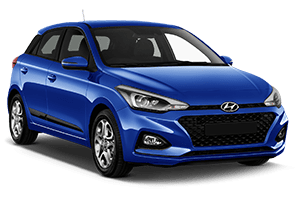
Economy: Set off in one of these and keep your travel budget on track. Lower daily rates and impressive fuel efficiency mean you'll spend less overall while still getting a comfortable, easy-to-handle ride.
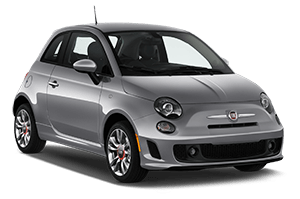
Small: Including mini and economy classes, small cars are made for everyday travel. If you're looking for a cheap rental car in France, this is where some of the best deals live. They're perfect for city streets and short trips, with low fuel use, easy handling, and enough space for the essentials.
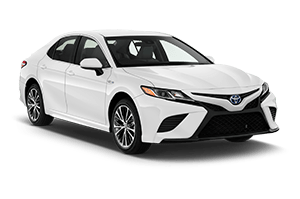
Medium: If you need something more spacious without going all out, this hits the mark. Medium rentals offer more room for passengers and bags, along with a good mix of power and efficiency. You'll find compact and intermediate models here.
Large: No cramming everyone in. No bags piled at your feet. Also known as full-size, large cars offer plenty of passenger space and the luggage capacity to match. Choose this level when you're covering some serious ground or bringing everyone with you.
SUV: From motorways to scenic detours, SUVs can do it all. With an elevated driving position, flexible seating layouts, and the ability to handle varied terrain with ease, they're perfect for road trips throughout France.
Van: When you've got plenty to carry, a van delivers. This type of car for rent in France makes room for everything and everyone. Including commercial vans and trucks, they're a reliable solution for group travel, moving or business transport.
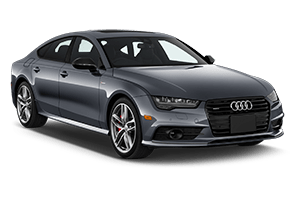
Luxury: Ready to go top tier? This is more than getting from A to B — it's about arriving in style. Luxury vehicles combine elevated design, high-end tech, and refined performance in one exceptional package.
Insurance and optional extras
Adding excess insurance to your rental car lets you drive with confidence. It protects you from paying a big excess fee in case of a collision or theft. Insurance policies can differ from one provider to another, so always compare your options.
Upgrade your ride with handy extras like mobile Wi-Fi or a reverse camera. These features can make your journey easier and more relaxed when you rent a car in France.
Driving in France: What you need to know
The minimum age to rent a vehicle in France is typically 21 years old. Individual providers may do things differently, so check your rental company's terms to make sure you meet the requirements.
If the kids are coming with you, find out if you need to add a child car seat to your car rental reservation in France. Whether required by local laws or not, they're always the safest way for little ones to travel.
Come prepared to keep the pick-up process smooth. You'll typically need your physical driver's licence (no electronic copies) and another form of photo ID. Bring a credit card with enough balance for the deposit too. If there's anything extra, it'll be listed in your booking.
Take your time getting acquainted with your rental. Adjust your seat and mirrors, test the brakes and blinkers, and get used to how it handles before you set off. And importantly, stick to the right side of the road in France.
Make sure you stay within the local speed limits. Most of the time that's around 45kph in urban areas and 125kph or so on highways, unless signed otherwise.
A blood alcohol concentration (BAC) limit of 0.05% applies in France. The most reliable way to be safe to drive is to avoid drinking completely.
The euro (EUR) is the currency you'll be using for day-to-day purchases and activities. Pay with a credit or debit card when it's possible, and keep some cash handy for places that don't accept electronic payment.
French is the language you'll most often encounter in this country.
Where to road trip in France?
France is easy to explore by car, with major rental hubs in Paris, Lyon and Bordeaux, plus airport pickup points like Paris Charles de Gaulle Airport and Nice Côte d'Azur Airport. If you're planning car rental in France, these routes show how different pickup points, trip lengths and vehicle types can shape your journey.
History and Culture: Normandy to the Loire Valley
Pick up your car in Caen and drive south through one of France's most historically layered regions, from wartime landing beaches to a valley lined with royal chateaux. It's a strong choice if you want a history-rich drive without covering long distances each day.
Recommended car: Compact sedan.
Suggested pickup point: Caen city centre.
Good for: History buffs, couples and first-time visitors to France.
Road conditions: Well-maintained highways, quiet rural roads, riverside routes.
Best time to go: April to June for mild weather and smaller crowds.
Trip length: Six to eight days.
Key stops: Bayeux, Amboise.
Food and Wine: Burgundy to the Rhône Valley
Pick up your car in Dijon and head south through France's most celebrated wine-producing corridor, passing medieval villages and vineyard estates at nearly every turn. The driving is easy and the stops are close together, making it a relaxed choice for travellers who want to spend more time off the road than on it.
Recommended car: Compact sedan.
Suggested pickup point: Dijon city centre.
Good for: Food lovers, wine enthusiasts and couples.
Road conditions: Well-paved regional roads, gentle valley routes, occasional narrow village streets.
Best time to go: September to October for harvest season.
Trip length: Five to seven days.
Key stops: Beaune, Mâcon.
Coastal: The French Riviera to the Camargue
Pick up your car in Nice and follow the Mediterranean coastline west toward a vast natural wetland delta and its wild, flat interior. It suits drivers who want a mix of busy coastal towns and open, unhurried landscapes, with manageable daily distances throughout.
Recommended car: Mid-size hatchback.
Suggested pickup point: Nice Côte d'Azur Airport.
Good for: Couples, beach lovers and wildlife watchers.
Road conditions: Coastal highways, urban stretches, flat rural roads.
Best time to go: May or June for warm weather before peak summer traffic.
Trip length: Seven to nine days.
Key stops: Marseille, Arles.
Weather and driving conditions in France
Weather
France follows four distinct seasons: spring and fall bring mild, changeable weather, summer turns warm and dry across most of the country, and winter is cool to cold.
Driving in France means preparing for a range of conditions depending on where you're headed. Rain is common across most of the country, so keep your speed down on wet highways and increase your following distance. Fog settles thickly in river valleys, particularly around the Loire and Seine, and you should use low-beam headlights rather than high beams to stay visible. Mountain passes in the Alps and Pyrenees bring snow and ice, where winter tyres or chains are legally required on certain routes. In the south, heat can build quickly and affect tyre pressure, so check your tyres before long drives through the interior.
Driving conditions
France has an extensive motorway network that connects major cities and regions, and the surfaces are generally smooth and well-maintained. A road trip in France often takes you onto smaller rural and departmental roads, which are typically paved and in good condition, though lanes can be narrow in villages and hilly areas like the Massif Central or Corsica.
French cities often feature tight one-way systems, priority-to-the-right rules at unmarked intersections, and limited street parking in historic centres. Paid parking zones are common, and low-emission areas now restrict older vehicles in some larger cities. {NS} Rural France is well-signed overall, but smaller roads through villages and farming regions can narrow considerably. Gas stations are sparse in remote areas, so filling up before heading into the countryside is a practical habit worth keeping.
Wild boar and deer are the animals most likely to cross your path in France, particularly on rural roads through forested areas at dawn and dusk, and most frequently during the autumn months.
Complete your road trip with a hotel
Whether you're going far or keeping it local, a comfortable place to stay can make all the difference after a full day of driving. After booking your car rental in France, browse the range of hotels in Paris if you're passing by this major stop. You can also compare Nice accommodation options or check out more places to stay in Lyon while mapping out the rest of your trip.


